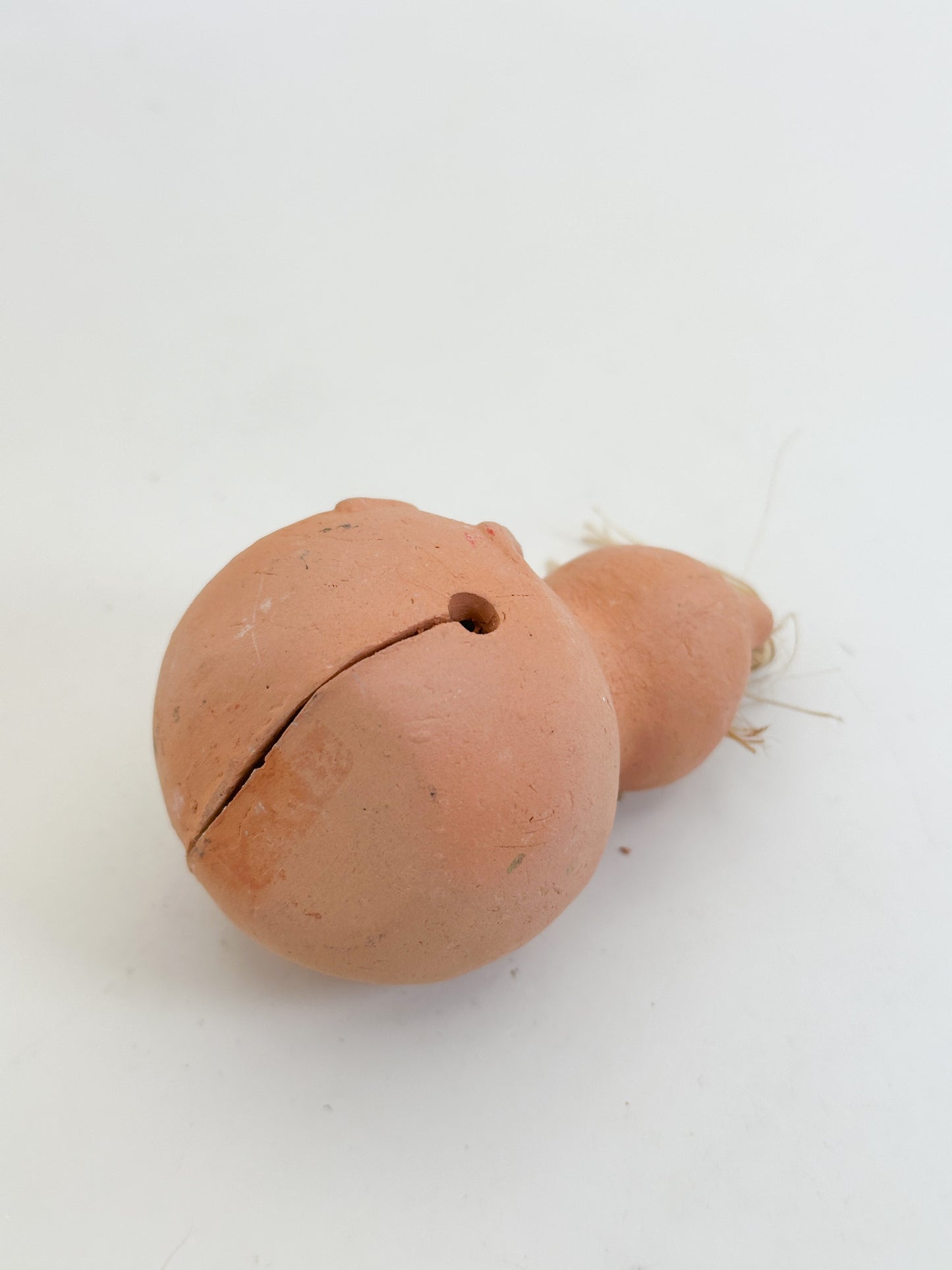
Cette clochette dorei (土鈴) rustique en argile provient de Hachita Jinja (蜂田神社) à Senshū, Osaka, un sanctuaire affectueusement connu sous le nom de Suzu-no-Miya (鈴の宮), « le sanctuaire des cloches ».
La clochette est moulée en forme de hyōtan (瓢箪 / gourde), avec des motifs de bon augure délicatement modelés décorant le corps arrondi. Une petite ouverture près de la base permet à la petite bille d'argile interne de sonner lorsque la clochette est déplacée, tandis que le cordon en forme de paille au sommet ajoute à son aspect artisanal et dévotionnel.
Hachita Jinja, situé dans l'actuelle ville de Sakai, préfecture d'Osaka, entretient un lien particulièrement profond avec les clochettes en argile. Selon la tradition du sanctuaire, les membres de l'ancien clan Hachita fabriquaient autrefois douze clochettes en terre cuite et les offraient devant la divinité, jugeant la fortune de l'année à venir d'après la qualité de leurs sons. Cette coutume a donné naissance au Suzu-uranai Shinji (鈴占神事) du sanctuaire, ou « rituel de divination par la cloche », qui aurait été pratiqué pendant plus de 1 100 ans. C'est de cette tradition que Hachita Jinja a acquis le nom populaire de Suzu-no-Miya.
La tradition des clochettes se perpétue aujourd'hui. Pendant les célébrations de Setsubun du sanctuaire, douze clochettes en argile sont utilisées lors de la cérémonie de divination, après quoi des dorei en forme de signes du zodiaque sont distribuées comme porte-bonheur. Ces clochettes sont traditionnellement considérées comme des omamori pour la bonne fortune et la protection contre le malheur (開運厄除).
La gourde elle-même est également un motif porte-bonheur établi de longue date au Japon. Parce que les gourdes produisent de nombreuses graines et étaient traditionnellement utilisées comme récipients pratiques, elles en sont venues à symboliser la prospérité, la fertilité, la bonne santé et la protection.
Taille : 4 x 5 x 9cm