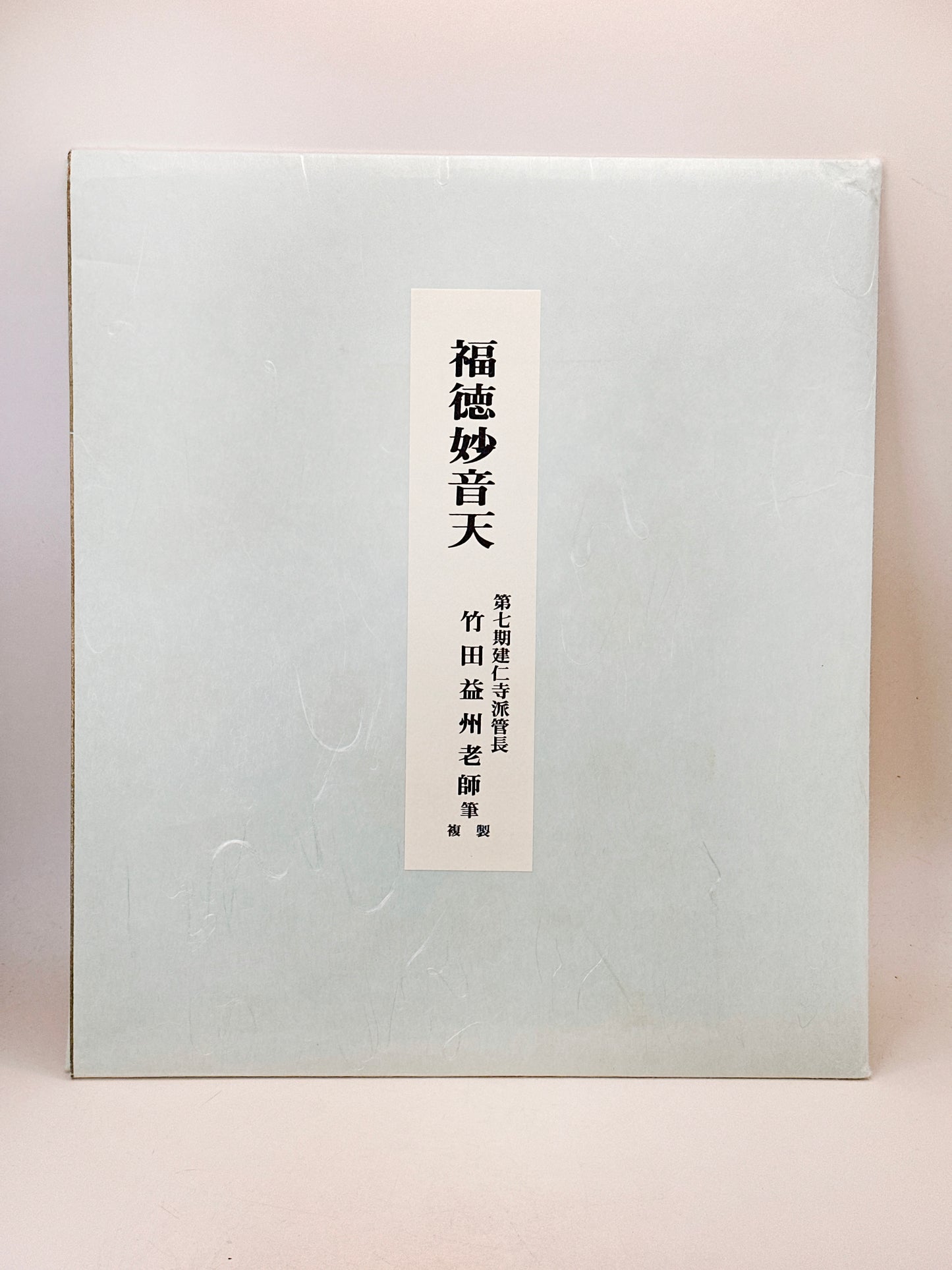
This shikishi print depicts Fukutoku Myōonten 福徳妙音天, a revered form of Benzaiten, the Buddhist goddess associated with music, eloquence, wisdom, and good fortune. The artwork presents the elegant image of a biwa (Japanese lute) rendered in expressive ink brushwork, symbolizing the divine instrument traditionally played by Benzaiten. The flowing lines of the biwa and the subtle ink washes evoke movement and harmony, emphasizing the spiritual connection between music, beauty, and enlightenment.
Above the instrument appears the inscription 「福徳妙音天」, identifying the deity represented in the composition. Fukutoku Myōonten is worshipped as a bestower of prosperity (福徳) and wondrous sound or sacred music (妙音). In Buddhist iconography, Benzaiten is often depicted holding or playing the biwa, symbolizing artistic inspiration, eloquence, learning, and the power of sound to elevate the spirit.
Takeda Ekishū 竹田益州 is a respected Zen monk, calligrapher, and cultural figure of modern Japan. Born in 1896, Takeda Ekishū became a prominent priest of the Rinzai Zen school and later served as the seventh head (管長) of the Kenninji branch of Rinzai Zen Buddhism, one of the most important Zen lineages in Kyoto. Throughout his long life he was widely admired not only for his religious leadership but also for his refined calligraphy and ink paintings. His works often combine spiritual themes with simple, elegant imagery, reflecting the Zen aesthetic of expressing profound meaning through minimal forms.
The composition itself embodies this philosophy. The single image of the biwa, drawn with confident brushstrokes and surrounded by ample empty space, creates a quiet, contemplative atmosphere. The simplicity of the design invites viewers to reflect on harmony, sound, and the blessings associated with Fukutoku Myōonten. The artist’s signature and red seals add authenticity and balance to the composition.
Size: 24 x 27cm